NDU-K AND NETHERLANDS DEFENCE ACADEMY ADVANCE CLIMATE SECURITY RESEARCH AND STRATEGIC COOPERATION
Climate change is reshaping Africa’s security environment, intensifying competition over natural resources, disrupting livelihoods, driving displacement and placing new demands on defence and security institutions. As climate-related risks intersect with existing vulnerabilities, the ability to anticipate threats, generate actionable intelligence and strengthen institutional resilience is becoming increasingly critical to national and regional security.
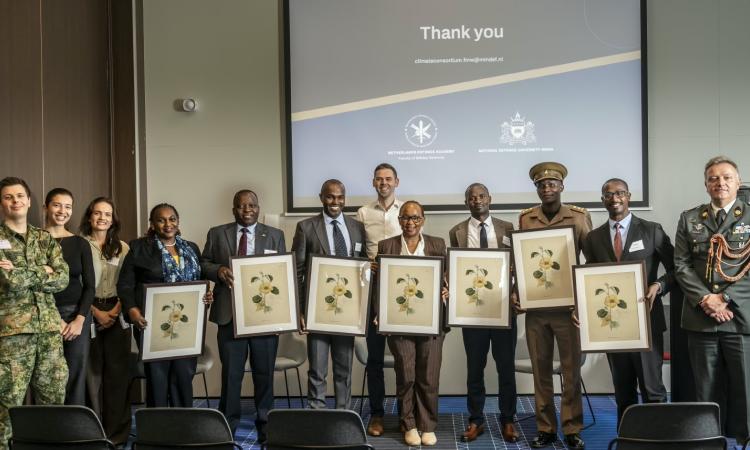
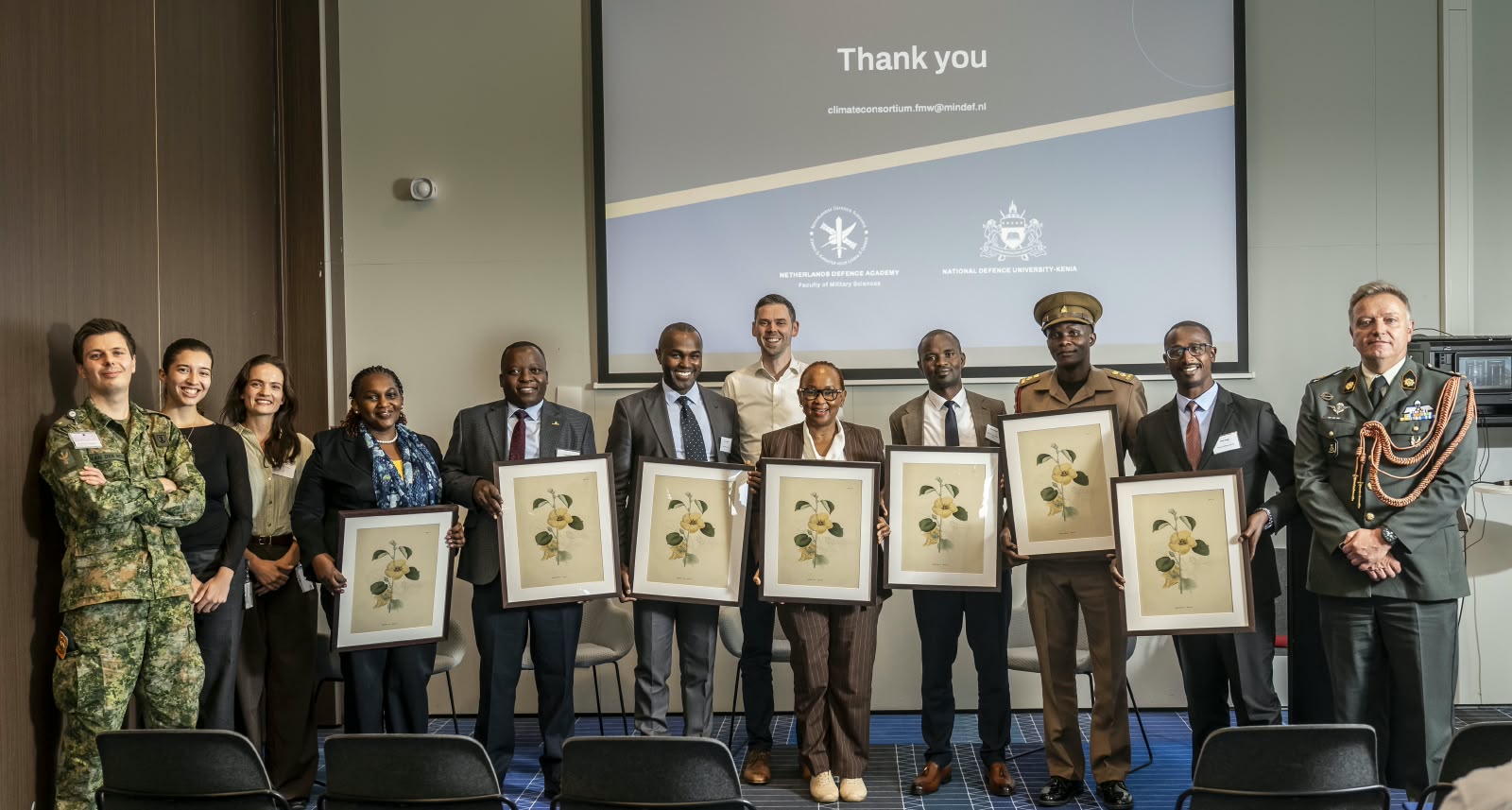
Against this backdrop, the National Defence University-Kenya (NDU-K) and the Netherlands Defence Academy (NLDA) convened the Climate Change and Security Dynamics in Africa Symposium in Amsterdam, the Netherlands. The symposium brought together researchers, policymakers and military practitioners to examine the security implications of climate change and explore research-informed responses for defence and security institutions across Africa.
The NDU-K delegation was led by the Deputy Vice-Chancellor, Academic Affairs, Prof. Anne Muigai, and a team from the Kenya Defence Forces (KDF) headed by Col. Dr. David Wando. Their participation underscored the importance of integrating academic research, military expertise and strategic partnerships in addressing evolving security challenges.
Discussions examined the effects of climate change on military personnel and civilian populations, the intersection of water security and environmental pressures, and the role of innovation in mitigating climate-related risks. Participants also explored the evolving roles and legitimacy of military institutions in Africa, civil-military relations, climate-induced disaster response, the environmental impact of military operations and strategies for reducing the military environmental footprint.
A key highlight of the symposium was the presentation of findings from the first major collaborative research project involving NDU-K and KDF on the KDF Environmental Soldier Programme. The presentation demonstrated the value of connecting defence practice with academic research to generate evidence that can inform institutional responses to environmental challenges and strengthen the integration of climate considerations into security planning.
The symposium also advanced the climate security partnership between NDU-K and the Faculty of Military Sciences of NLDA. Anchored in a Letter of Intent signed by the Netherlands Minister of Defence, Ruben Brekelmans, the partnership has provided a framework for deeper institutional collaboration, including the establishment of a Climate Security Consortium.
The Consortium has identified three priority areas: environmental governance, disaster response and climate intelligence. Together, these priorities recognise that addressing climate-related security risks requires more than military preparedness. Effective responses also depend on coordinated governance, civil-military engagement, improved anticipation of emerging threats and the translation of climate data into actionable intelligence to support informed decision-making.
For NDU-K, the collaboration reinforces the strategic value of research, innovation and international knowledge exchange in defence and security. By bringing together academic inquiry, military experience and policy engagement, the University strengthens its contribution to developing strategic leaders and generating knowledge that informs national security and development.
The symposium underscored the need to translate recognition of climate change as a security concern into practical measures for anticipating and mitigating its effects. Strengthening climate intelligence, informing policy through evidence and advancing innovative approaches will be essential to improving the preparedness and resilience of defence institutions and the communities they serve.
NDU-K and NLDA remain committed to advancing the Climate Security Consortium as a platform for sustained research, knowledge exchange and collaborative action. Through this partnership, the institutions aim to strengthen climate-resilient approaches to defence and security, contributing to informed decision-making and more effective responses to evolving security challenges across Africa.