DEVELOPING STRATEGIC LEADERS FOR A COMPLEX SECURITY ENVIRONMENT
NDU-K Inducts New Postgraduate Cohorts
The increasingly complex global security environment demands a new generation of intellectually agile leaders capable of providing strategic, evidence-based solutions to multidimensional security challenges. In response to this evolving landscape, the National Defence University-Kenya (NDU-K) reaffirmed its commitment to advancing strategic policy, defence and security studies as it welcomed three new postgraduate cohorts at the International Peace Support Training Centre (IPSTC) and one cohort at the Joint Command and Staff College (JCSC), both colleges of the University.
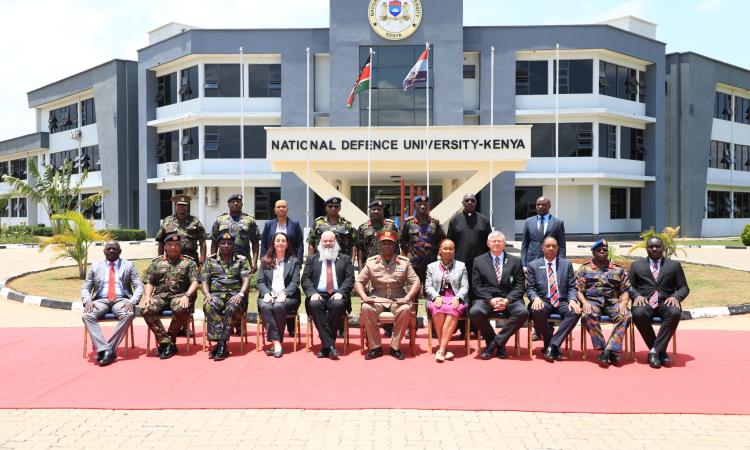
The induction ceremony, held at the University Seat in Lanet, was presided over by the Vice Chancellor, Lieutenant General David Tarus who welcomed to the University the two institutions led by the Director of the International Peace Support Training Centre, Major General Charles Mwazighe and Colonel Trevor Ogutu representing the Commandant Joint Command and Staff College.
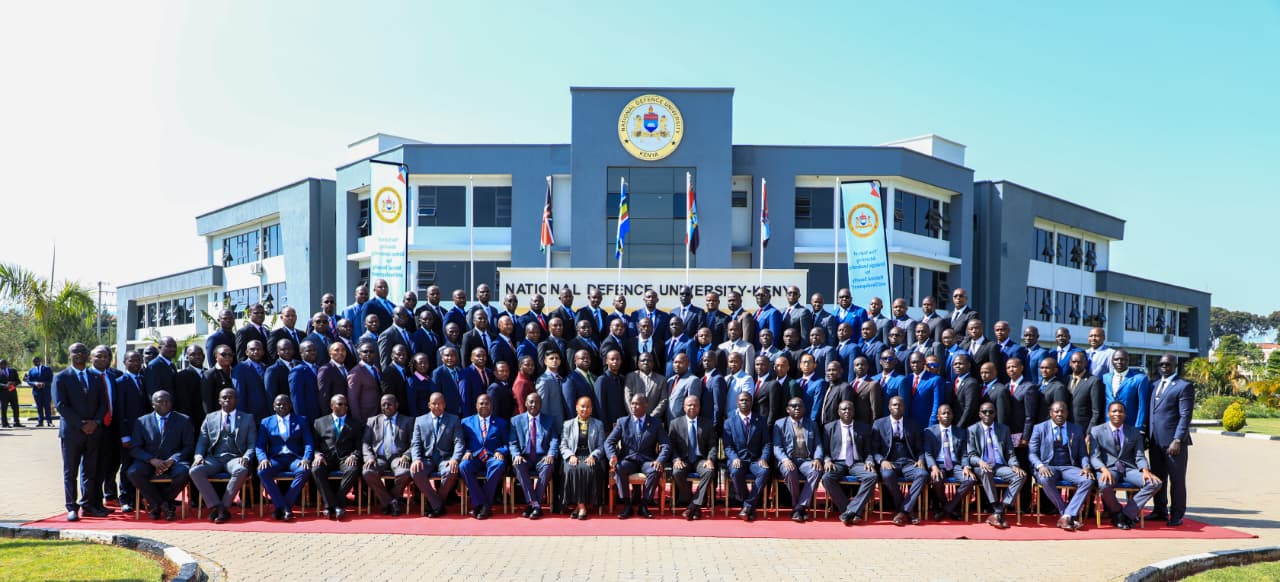
During the ceremony, the University inducted the second cohort of the Doctor of Philosophy in Crisis and Disaster Management, the fifth cohort of the Master of Arts in Crisis Response and Disaster Management, and the inaugural cohort of the Master of Arts in Gender and Peace Support Studies at IPSTC, and JCSC course No.42 of Academic year 2026-2027, marking the beginning of an important academic journey for professionals drawn from the military and civilian sectors, united by a shared commitment to strengthening peace, security and resilience.
The programmes have attracted participants from the Kenya Defence Forces (KDF), Government Ministries, Departments and Agencies (MDAs), State agencies, as well as military officers and senior government officials from partner and allied countries. The diversity of the participants reflects NDU-K's growing stature as a regional and international centre of excellence for strategic education, policy research and professional military development.
Addressing the newly inducted students, Lt Gen Tarus observed that the contemporary security landscape has evolved beyond conventional military threats to include terrorism, violent extremism, transnational organised crime, cyber insecurity, climate-induced disasters, pandemics and emerging technologies. He noted that responding to these interconnected challenges requires leaders who can think critically, conduct rigorous research and develop practical, multidisciplinary solutions. Such leaders, he said, are essential in informing policy and strengthening national, regional and international security.
The Vice Chancellor explained that NDU-K continues to integrate professional military education with academic programmes across its colleges to produce operationally competent leaders, strategic decision-makers and policy advisers capable of addressing emerging security realities. He challenged the students to embrace intellectual curiosity, innovation and disciplined scholarship, emphasizing that their research should generate practical, evidence-based recommendations that contribute to peace, security, crisis response and disaster management.
As the newest members of the NDU-K community, the students now join a growing network of professionals committed to advancing knowledge, strengthening institutions and promoting sustainable peace and security. Their academic journey represents not only personal and professional growth but also an investment in building resilient societies capable of responding to the evolving security challenges of the twenty-first century.
The induction reaffirmed NDU-K's enduring mission of developing transformative leaders through excellence in education, research and innovation. By bringing together military professionals, civil servants and international participants in a shared learning environment, the University continues to strengthen strategic partnerships, generate policy-relevant knowledge and reinforce its position as Kenya's premier institution for strategic policy, defence and security studies, with an expanding regional and global footprint.